Newsletter Subscribe
Enter your email address below and subscribe to our newsletter

 ByJohn A
Commercial buildings rely on safe and reliable electrical systems to support daily operations. Offices, warehouses, retail stores, restaurants, and industrial facilities use electricity for lighting, equipment, heating, cooling, and various other essential functions. However, electrical systems can develop faults over time, creating potential hazards for employees, customers, and property.
Commercial electrical service helps identify electrical problems, maintain equipment, and reduce the risk of accidents. Regular inspections, timely repairs, and preventive maintenance can help businesses maintain safer working environments while reducing unexpected disruptions.
Understanding how professional electrical services prevent hazards allows business owners and facility managers to make informed decisions about electrical safety.
Commercial properties often have complex electrical systems that handle substantial power demands. When these systems are damaged, overloaded, or poorly maintained, they can create serious safety risks.
Electrical circuits have specific capacity limits. When too many appliances or machines draw power from the same circuit, the wiring may overheat. Overloaded circuits can cause breakers to trip frequently and increase the risk of electrical fires.
Commercial electrical service helps identify circuits that are carrying excessive loads. An electrician can assess power requirements and recommend suitable circuit upgrades or load distribution improvements.
Wiring can deteriorate because of age, physical damage, environmental conditions, or improper installation. Loose electrical connections can also generate heat and cause intermittent power problems.
These issues may remain unnoticed until they produce warning signs such as flickering lights, burning smells, or discoloured outlets. Professional inspections help identify damaged components before they develop into more serious hazards.
Commercial buildings use a wide range of electrical equipment, including motors, distribution panels, lighting systems, and machinery. Faulty components can expose workers to electric shock, cause equipment failure, or create fire hazards.
Routine maintenance helps identify equipment that requires repair, replacement, or further investigation.
Professional electrical maintenance focuses on identifying risks and addressing them before they cause accidents or operational problems.
Electrical faults do not always produce obvious symptoms. A circuit may have an unsafe connection, insulation may be deteriorating, or an electrical panel may be showing signs of excessive heat.
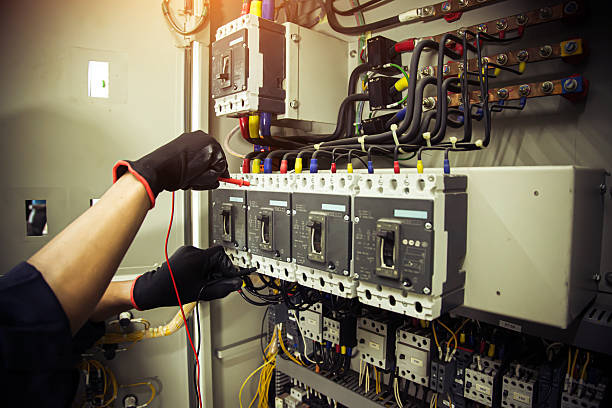
During an inspection, a qualified electrician examines accessible wiring, switches, outlets, distribution boards, protective devices, and other relevant components. Testing may also be performed where appropriate.
Early identification allows businesses to arrange repairs before minor defects become significant safety concerns.
Electrical fires can result from overheating, damaged insulation, loose connections, faulty equipment, or incorrectly installed components.
Commercial electrical service helps reduce these risks by checking for conditions that could cause excessive heat or electrical arcing. Electricians can also assess whether circuits and protective devices are suitable for the building’s electrical demands.
Where necessary, damaged wiring, faulty connections, and unsuitable components can be repaired or replaced.
Businesses should never ignore burning odours, unusual buzzing, scorch marks, or repeated breaker trips. These warning signs require prompt assessment by a qualified professional.
Circuit breakers and other protective devices help protect electrical systems against specific faults, including overloads and short circuits. Depending on the installation, additional protection may be required to reduce the risk of electric shock or earth faults.
Regular electrical service helps determine whether protective devices are correctly selected, installed, and maintained.
An electrician can investigate breakers that trip repeatedly and identify the underlying cause rather than simply resetting them. Protective devices should never be bypassed or replaced with unsuitable alternatives.
Electric shock can occur when someone comes into contact with exposed live conductors, damaged equipment, or improperly grounded electrical systems.
Commercial electrical service helps identify damaged insulation, unsafe connections, grounding problems, and other conditions that may expose people to electrical current.
An electrician can inspect relevant protective measures and carry out suitable tests to verify that the installation meets applicable safety requirements.
Employees should also be instructed to avoid damaged electrical equipment and report exposed wires, wet electrical areas, or unusual equipment behaviour immediately.
Preventive maintenance involves examining and maintaining electrical systems before a failure occurs. It helps businesses manage safety risks instead of waiting for an emergency.
Electrical components experience wear through regular use, environmental exposure, vibration, and temperature changes. Connections may loosen, insulation may deteriorate, and equipment may become less reliable.
Scheduled inspections help identify these changes and determine whether repairs or replacements are necessary.
See also: Why Businesses Need Professional IT Equipment Relocation Services in Las Vegas
Electrical problems can interrupt operations, damage equipment, and create unsafe working conditions. Preventive maintenance helps identify developing faults that could otherwise cause unexpected shutdowns.
For example, a warehouse may depend on lighting, ventilation, charging equipment, and machinery throughout the working day. Maintaining these systems can help reduce avoidable disruptions while supporting a safer environment.
Businesses may add machinery, computers, refrigeration units, or other equipment as their operations expand. Existing circuits may not be suitable for these additional loads.
An electrical assessment can help determine whether the current installation can safely support increased demand. Recommended improvements may include additional circuits, distribution upgrades, or other changes designed by a qualified electrician.
The scope of an inspection depends on the building, its electrical installation, equipment, operating conditions, and applicable regulations.
Electrical panels, accessible wiring, outlets, switches, and connections should be examined for visible damage, signs of overheating, corrosion, or other defects.
Any identified issue should be assessed to determine the appropriate corrective action.
Suitable electrical tests can help identify faults that are not visible during a visual inspection. Depending on the installation, these may include checks of grounding, insulation resistance, circuit continuity, and protective devices.
Testing should be carried out by qualified personnel using appropriate procedures and equipment.
Electrical safety also depends on how equipment is operated and maintained. Businesses should review access to electrical panels, equipment isolation procedures, staff reporting processes, and the condition of electrical work areas.
Keeping electrical panels accessible and ensuring that workers understand basic safety procedures can help reduce preventable incidents.
Professional electrical maintenance is important, but everyday workplace practices also contribute to electrical safety.
Businesses can reduce risks by following several practical measures:
Employees should never attempt to repair exposed wiring or open electrical panels unless they are appropriately qualified and authorised.
Businesses should arrange electrical service when warning signs appear, after changes to electrical loads, and according to a maintenance schedule suited to the property’s needs.
Immediate professional assessment is necessary when there are signs of electrical burning, visible arcing, exposed live wiring, electric shock, or other potentially dangerous faults. If an area appears unsafe, keep people away and follow established emergency procedures.
Electrical service may also be needed when a building undergoes renovation, new equipment is installed, circuits repeatedly trip, or the electrical system has not been inspected for an appropriate period.
The required inspection frequency depends on the installation, usage, environmental conditions, and applicable legal requirements. A qualified electrician can recommend a suitable maintenance programme.
Commercial electrical service plays an important role in preventing electrical hazards by identifying faults, maintaining protective devices, inspecting wiring, and ensuring that electrical systems can safely support business operations. Regular maintenance can help reduce the risks of electrical fires, electric shock, equipment damage, and unexpected power interruptions.
Businesses should combine professional inspections with practical workplace safety procedures and prompt reporting of electrical problems. Taking a proactive approach helps protect employees, visitors, equipment, and property while supporting reliable daily operations.